Check on the dog
It goes and finds the animal rather than waiting for the animal to walk past a fixed camera. Then it plays with them, which is the part a camera can never do.
CAMERADRIVELASER POINTER
A home robot that outlives us.
Jibo. Vector. Astro. None of them failed because the hardware was bad — they failed because the company did, and each was built so that when the servers went off, the robot on the shelf became an ornament.
Orbie is built so that cannot happen. The CAD, the firmware and the failures are public. Three hardware generations and ten units built by hand, in the open.
3
hardware generations
10
V2 units built by hand
1,299
messages in the build log
355
photographs, dated
6
people
$0
subscription, ever
// 01 — WHAT IT IS FOR
A camera bolted to a wall waits for something to walk past it. A robot that can cross a room can go and look — and once it is there, it can also play, speak, and take a temperature.
It goes and finds the animal rather than waiting for the animal to walk past a fixed camera. Then it plays with them, which is the part a camera can never do.
A quiet pass through the room, a still frame, a skin temperature without a thermometer in an ear. No subscription, and the footage goes wherever you decide it goes.
It comes to the room and says the thing out loud, at the time, in a voice — which lands differently from a phone alert in another room.
A route through the rooms, a photo from each, the back door checked. A patrol is just a list of waypoints and a camera.
Most of the time it is not doing a job. It has a face, it looks at what it hears, and it reacts. That is the feature people actually keep.
Ten units were built by hand with, in the words of the person who built them, "a lot of tape, glue, and adhesives". It was always meant to be opened.
// 02 — THE BODY
A spec sheet tells you what is inside. This one also tells you what each part lets you do — because that is the number that matters when the wiring diagram is public.
V3 — ELEVEN SUBSYSTEMS · TAP A POINT
SCCB 0x3c · auto-detected
Mounted in the head above the display, so where it points and where the robot appears to be looking are the same direction. Streams MJPEG on port 81 and serves a single still on /capture.
WHAT IT OPENS UP
This is the sensor everything interesting hangs off. Any vision model you can reach over HTTP — local or hosted — can drive the robot from one still frame. The capture endpoint exists precisely so you do not have to touch the firmware.
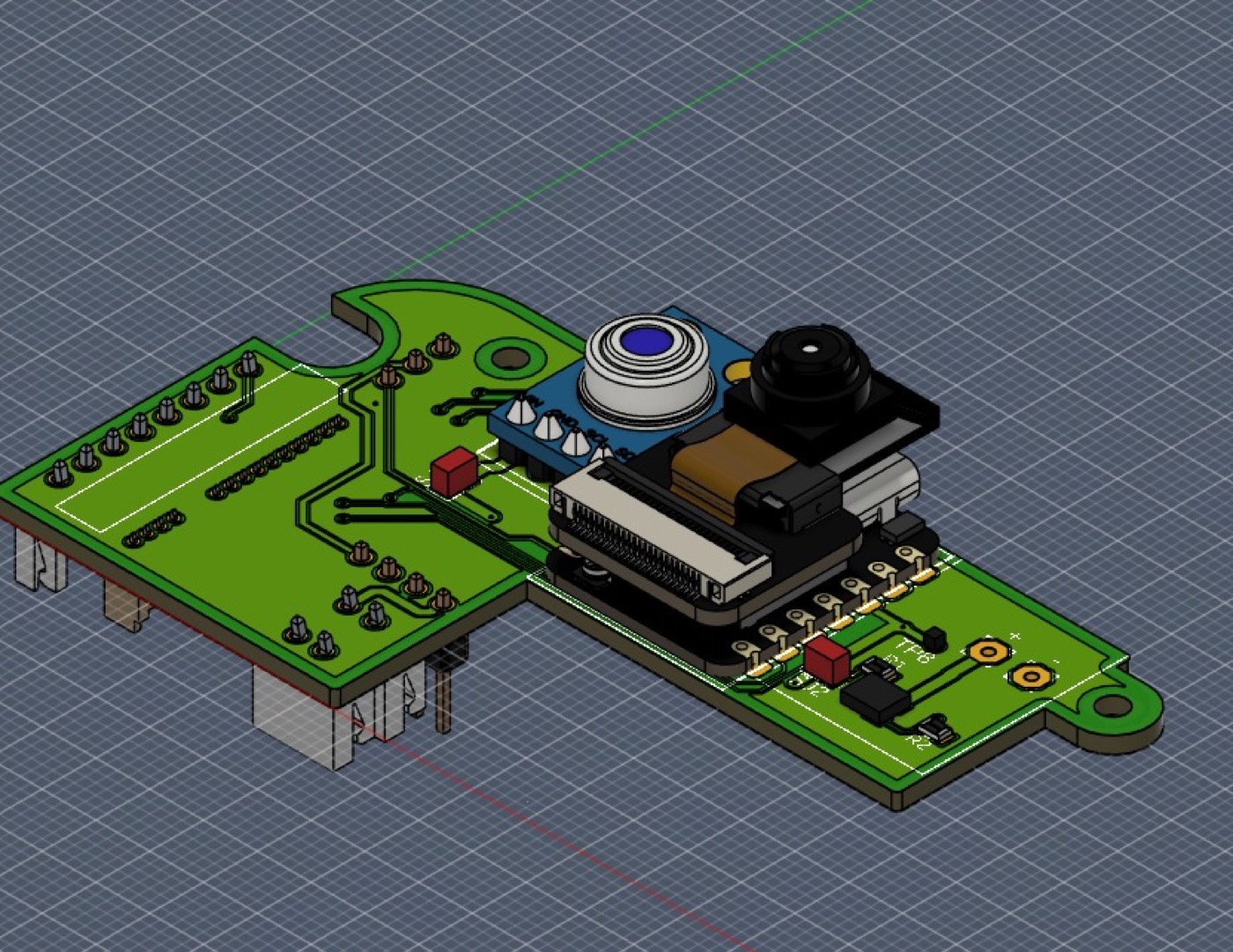
// 03 — WHAT YOU COULD BUILD
Most “open” robots open the software and keep the machine shut. Publish the CAD and the PCB alongside the firmware and the project stops being a product with a plugin system — you can change the body, not just the behaviour.
Most of what follows is a few lines against the HTTP interface. The ones marked “a term project” are where you would open the CAD or the firmware instead.
Laser routine that runs at 3pm while the house is empty, driving to a different room each day.
Infrared reading paired to a photo and a timestamp, logged wherever you keep records.
Point /capture at any vision model and let it decide what the robot does next. No firmware changes.
A route past every pot, a photo of each, drooping leaves flagged before anyone notices.
Time-of-flight pointed down instead of forward, so it stops at a cliff. A patch everyone benefits from.
Expressions are bitmaps. Draw a set, open a pull request, watch it ship to other people’s robots.
Person detection on the camera, distance held by the time-of-flight, gait handled by the wheels.
Mic in, hosted model, speaker out — a conversation partner that follows you around the kitchen.
Motion route after midnight, a frame to your phone only when something changed.
The CAD is published under a licence that lets you fabricate it. Print a new shell, mount a new sensor.
Two units, one map, rooms divided between them. Nothing in the firmware assumes it is alone.
Record a joystick sequence, name it, trigger it by voice. The recorded macro is the primitive everything else builds on.
A cold morning, a route through the house, an infrared reading off every radiator. Find the one that never warms up.
Only fire when the camera can see the animal, and stop when it stops caring. Better than a loop, and kinder.
Tap anywhere in the camera view and the head turns until the laser lands there. Aiming is a neck problem, not a driving one.
Point the thermometer at the mug and say so out loud when it crosses drinkable. Trivial, and you would use it every day.
A volume meter with a face — the display reacts to how loud the room is. The cheapest possible way to make it feel present.
The eyes hold a dim glow and brighten only when the time-of-flight sees someone walk past. No app, no switch.
Hold a page up to the camera, get it back through the speaker. Text recognition is somebody else’s API and this is the body for it.
Route planning that watches the cell emberage and turns back while it still can. Unglamorous, and the difference between a demo and a device.
None of these are on a roadmap and none of them are promised. They are the obvious things eleven parts and a published wiring diagram make possible — written down so it is clear how low the floor is. The unobvious ones are the reason to open the hardware at all.
// 04 — THREE GENERATIONS
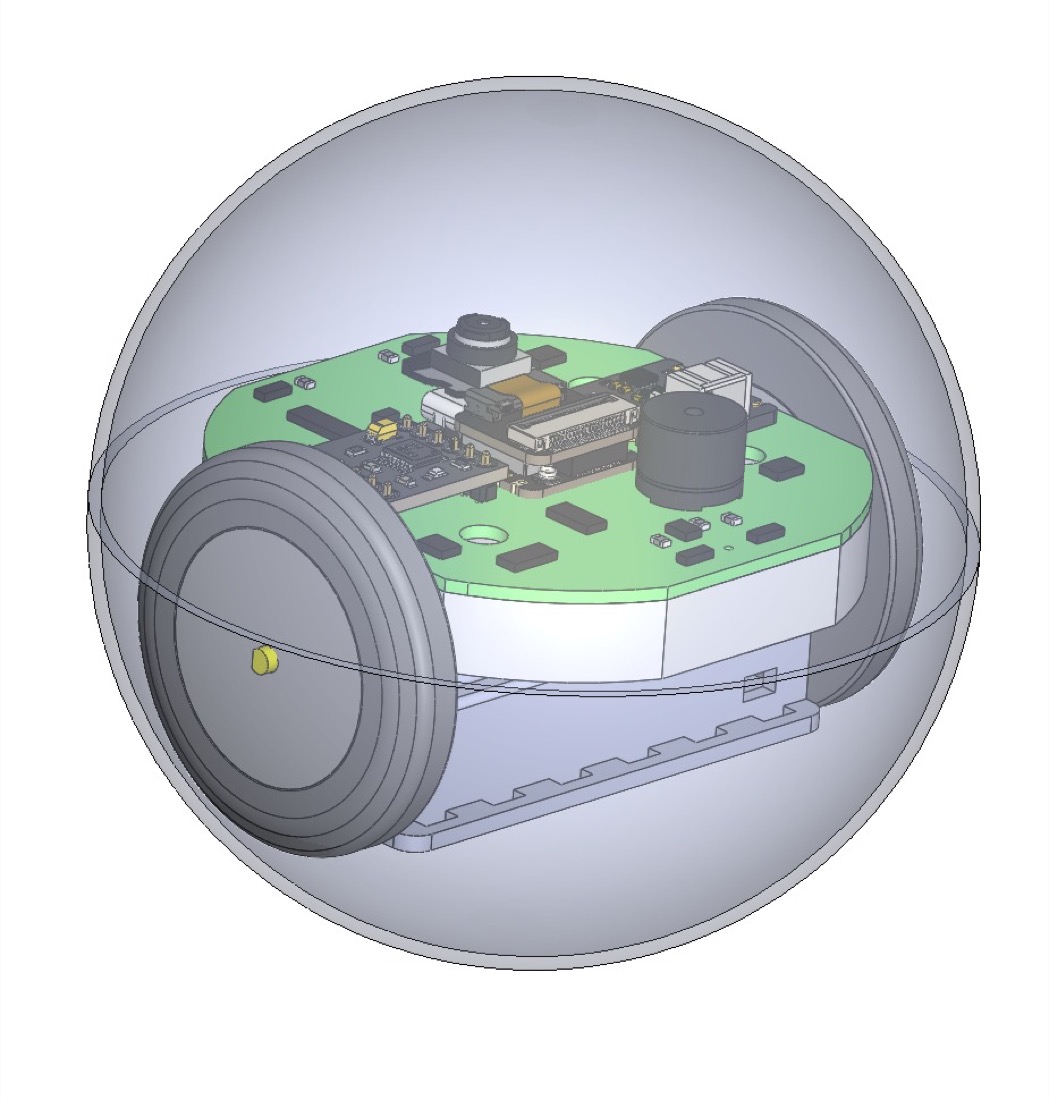
A replication of the open-source ESP-ROLL ball bot, built to learn what would and would not work: an ESP32 camera in a transparent sphere, driven by two wheels, with the battery slung underneath as the ballast that makes it roll. Two weeks was the estimate.
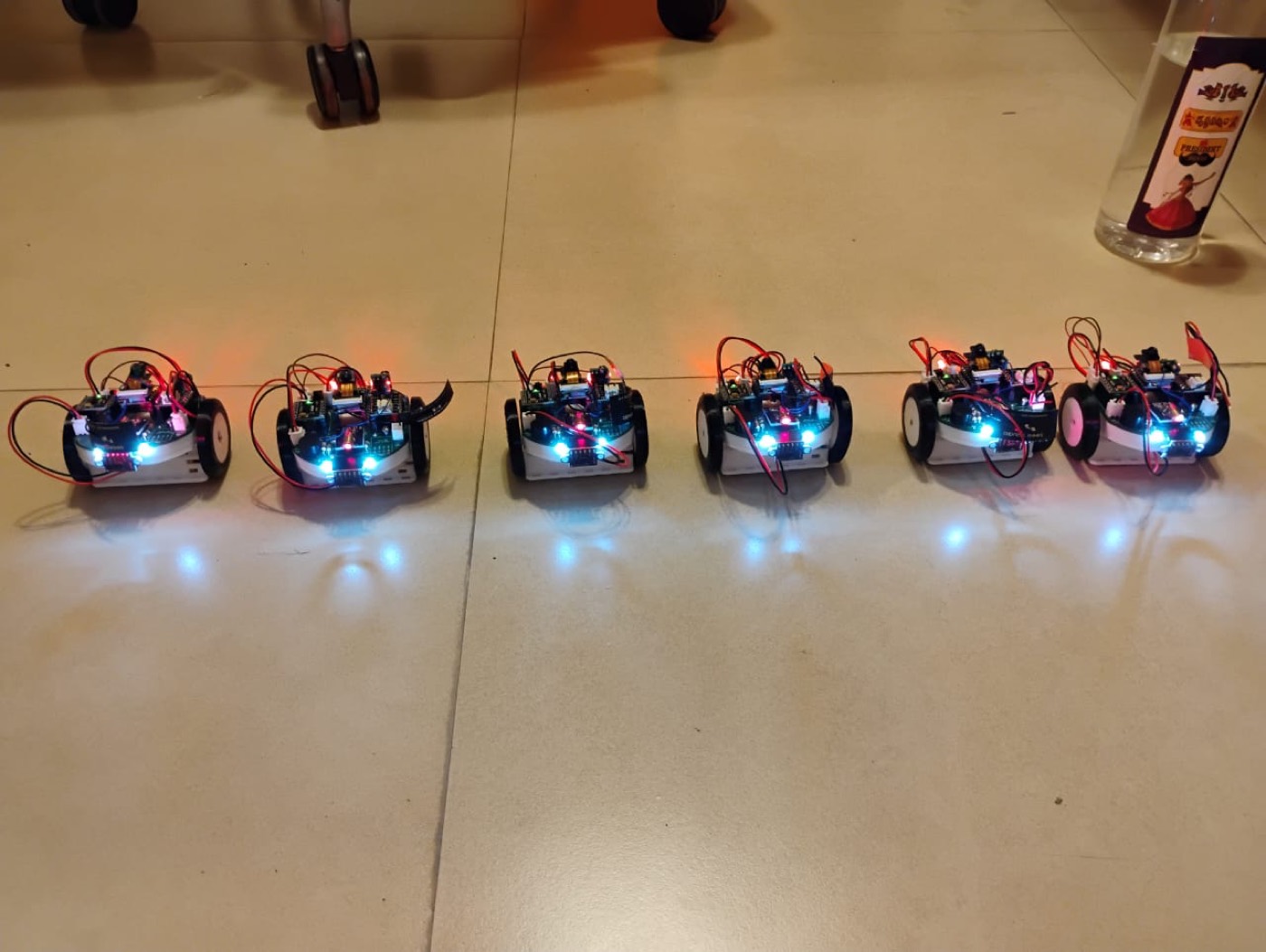
Our own rolling design, built ten times over so there was something to hand people. Still transparent, still nothing hidden. The first one was assembled with tape and glue.
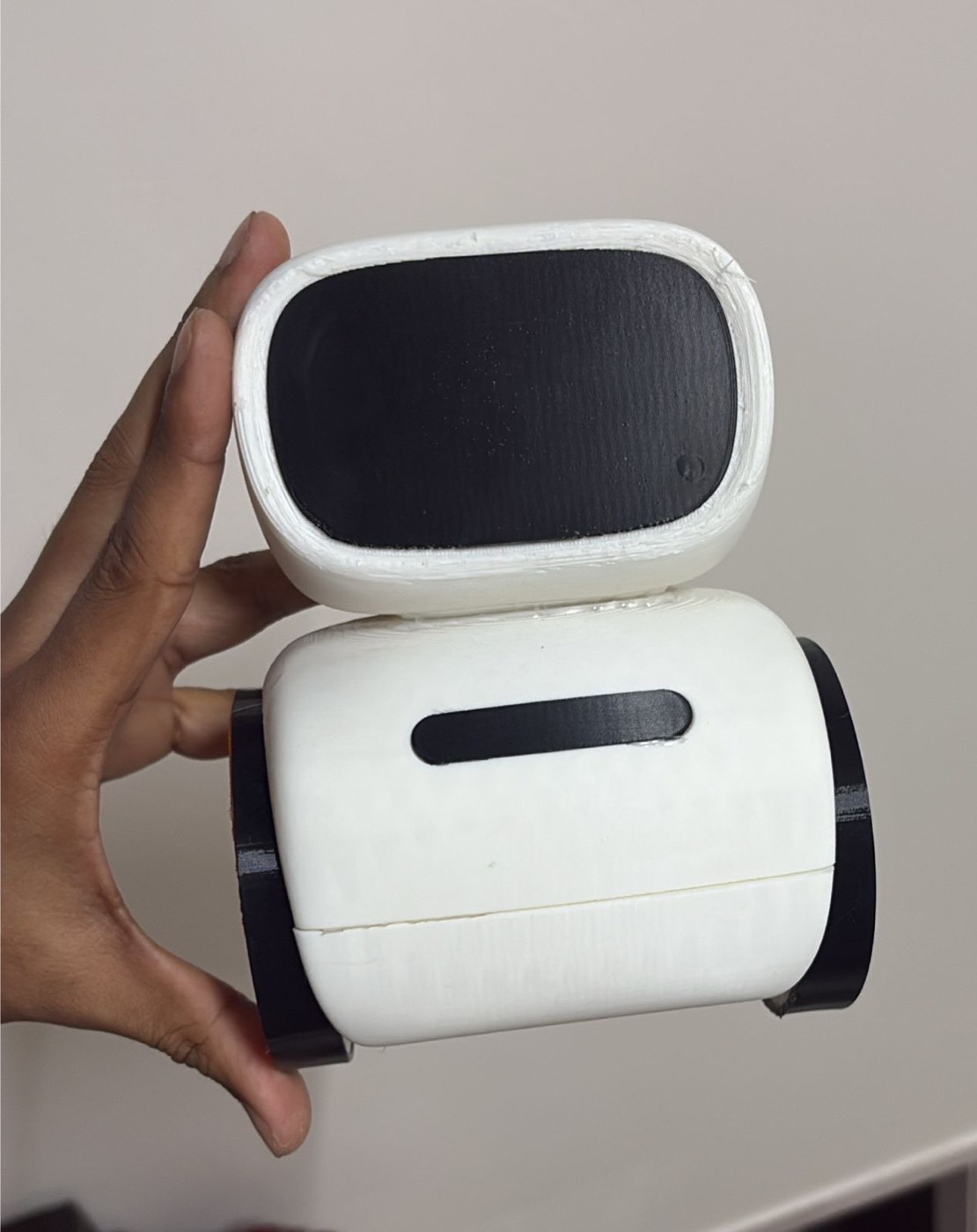
A complete rethink. Two wheels, a tilting head, a custom dot-matrix face. It stopped being a ball and started being someone.
// 05 — WHAT OPEN MEANS HERE
Without a licence file, default copyright applies and nobody may legally use, modify or redistribute anything. Every one of these repositories sat in exactly that state until 5 September 2026, while the README claimed otherwise. The licences below are now committed, and you can check them rather than take our word.
Reciprocity on the hardware is the part that matters. Under a permissive licence a larger manufacturer could take the CAD, close it, and ship it while contributing nothing back — using the only advantage this project has against it.
CREDIT WHERE IT IS OWED
V1 is a replication of ESP-ROLL by Max Imagination, published under CC BY-NC-SA, which also credits s60sc for the ESP32-CAM firmware. That project is the reason this one started. It is quarantined as reference-only until a lawyer has read the relationship properly.
Carries an explicit patent grant. MIT is silent on patents, and this is robotics.
◆ IN THE REPOSITORY
Strongly reciprocal — a modified design has to stay open. A permissive hardware licence would let a larger manufacturer close a fork.
◆ IN THE REPOSITORY
The build record is part of the project, and it should travel under the same terms.
◆ IN THE REPOSITORY
Derives from Max Imagination’s ESP-ROLL under CC BY-NC-SA: non-commercial, share-alike. Credited, not relicensed, not for commercial use until a lawyer has read it.
◇ QUARANTINED — REFERENCE ONLY
// 06 — WHO IS BEHIND IT
Sponsorship means Ayva funds development and staff time, and manufactures and sells assembled units. That arrangement paid for three hardware generations, and it is worth saying plainly rather than obscuring.
Making that real rather than asserted takes three things. The repositories live under the project’s own account, not an Ayva one — done. Governance sets out what Ayva does not get: no casting vote on technical decisions, no ability to close the design, no gatekeeping on forks — done. Copyright sits with Ayva by default, because Ayva paid for the work, and moving it to contributors is a legal step nobody has taken yet — not done, and the licence notices say so.
There is nothing to buy on this site, and nothing to sign up for. When there is something to say about how continued development gets funded, it will be said here in full and in advance — not on a countdown.
THE SIX PEOPLE WHO BUILT IT
Every photograph, quotation and part number on this page came out of their group chat and their CAD files.
// 07 — FOLLOW THE BUILD
THE BUILD IS POSTED AS IT HAPPENS
@orbie_robot
Firmware that did not compile, parts that arrived wrong, the display the day it finally lit. If you would rather watch than read, this is where it goes first.
// 08 — A NOTE FROM ASHOK
I am a software engineer who kept ending up in hardware: a media centre funded on Indiegogo, a yogurt machine that COVID killed, an AI toy for children that I patented and licensed. Friends with kids kept asking for the same thing for their pets.
Orbie is my first robot. In a year or two I want it in 10,000 homes, learning what the dog did to it. Then 100,000.
— ASHOK JAISWAL · HONG KONG
// 09 — FAQ